Have you ever felt that life is an endless struggle to become somehow better than you believe yourself to be?
Perhaps you’ve tried to overcome old wounds, quiet the inner voice of self-doubt, or simply feel more at peace within yourself. Yet despite your best efforts, the same undesirable patterns keep returning.
Perhaps, early on, life asked more of you than it should have.
You are not alone.
The Human Predicament
For many years, we are completely dependent on others for our care, approval, and belonging. To receive that care, we adapt. We learn, often without realizing it, to become who others need us to be.
Those adaptations serve us well. They help us survive and find our place in the world. But over time they become so woven into our sense of self that we mistake those adaptations for who we truly are.
As a result, the longing you’ve carried—to feel more at peace, more real, more valued—may not simply be a search for healing. It may also be an invitation to rediscover the spontaneous self that lived long before you learned who you needed to become.
The First Glimpse
What if the person you’ve spent your life trying to improve isn’t who you truly are?
What if many of the struggles you face arise, not simply from what happened to you, but from who you needed to become in order to survive what happened to you?
That question—and the possibility it points to—is explored more fully in Awakening Into Authenticity, and perhaps, in considering it, lies the first glimpse of who you truly are.
Sometimes a single glimpse is enough
to change the direction of a life.
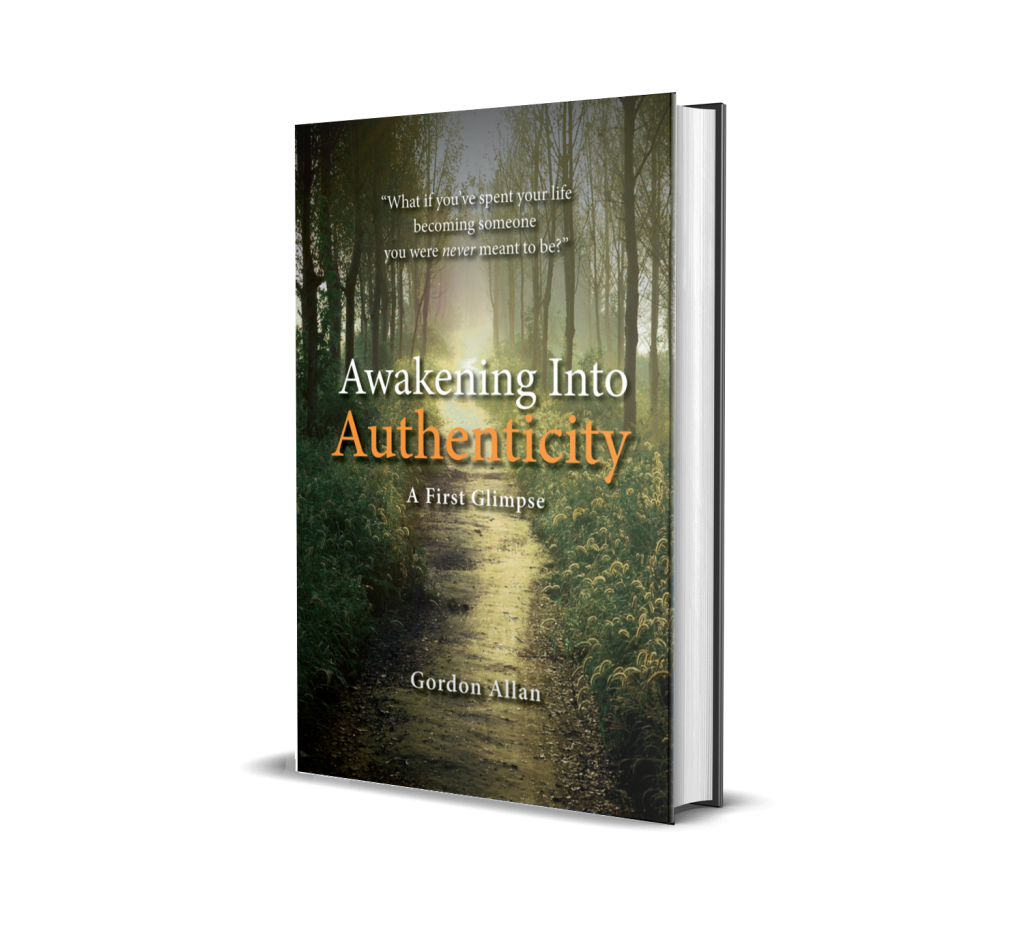
Awakening Into Authenticity: A First Glimpse
In an engaging and enlightening dialogue between Gordon Allan and his teacher, Vic Gioscia, PhD, the book invites readers into a conversation exploring how the person we believe ourselves to be gradually takes shape. It then reveals a path toward the possibility of seeing what lies beyond the adapted self—who you truly are.
Awakening Into Authenticity : The First Glimpse
Gordon Allan
I didn’t arrive at the ideas in this book through academic study or theory. I arrived at them through lived experience.
For much of my life, I found myself asking many of the same questions you may be asking today. Like many people, I believed that if I could somehow become a better person—more successful, more confident, more acceptable, and less self-critical—I would finally be enough. Yet even while building what many would have considered a successful business, something essential remained missing. I was not at peace within.
Then I met Vic Gioscia.
That meeting did not give me a new set of beliefs. It gradually changed the way I saw myself. Over the years that followed, our conversations transformed how I understood myself, and in doing so, what it means to live authentically.
The conversations shared in Awakening Into Authenticity changed the direction of my life long before they became a book. My intent is simply to share these conversations such that, if these questions resonate with you, they may illuminate your own journey as they did mine.
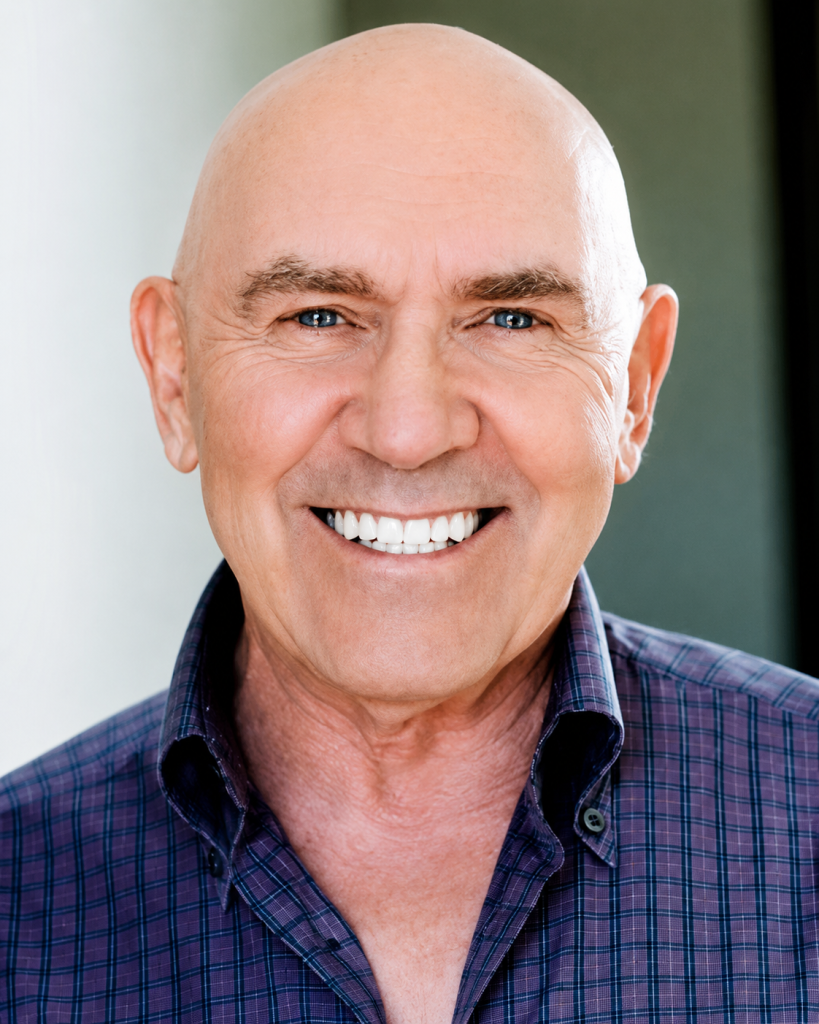
Some people answer our questions. Others change the questions we ask.
Vic Gioscia PhD
Some people answer our questions. Others change the questions we ask.
Vic Gioscia was one of those people.
For more than twenty years, he was my guide, mentor, and friend. His gift was not simply an extraordinary understanding of human nature, but a remarkable capacity to help people see themselves with honesty, compassion, and fresh eyes.
During our conversations, Vic rarely imposed conclusions or offered quick solutions. Instead, he created the conditions in which deeper questions could emerge—questions that gently dissolved the assumptions I had carried for much of my life without ever realizing they could be questioned.
The conversations recounted in Awakening Into Authenticity grew out of the many days Vic and I spent together. They are shared here with the expectation that, as you continue reading, you may discover what I discovered: that sometimes seeing ourselves differently is the first glimpse that changes the direction of a life.
Continue The Conversation
If this exploration resonates with you, I invite you to join Vic and me in a stimulating conversation that has unfolded over many years, exploring how the person we believe ourselves to be gradually takes shape, why familiar, unwanted patterns continue to repeat themselves, and what becomes possible when we begin to see ourselves with new eyes.
You may discover that, before long
the questions become your own.
And perhaps, in exploring these questions, you will begin to see yourself, and your entire life, from a perspective you may never have considered before. And, in doing so, discover the possibility of psychological freedom: the quiet experience of finally feeling at home in your own skin.